
How to Create a Relaxing Home Workspace

A home workspace should support your daily tasks without making your home feel like a busy office. With the right layout, lighting, colors, and storage, you can create a space that feels calm, comfortable, and inviting.
Whether you work from home full time, manage household tasks, or enjoy creative hobbies, a relaxing workspace can make it easier to settle in and stay focused. You do not need a large room or an expensive makeover. Small, thoughtful changes can make a noticeable difference.
Choose the Right Location
Start by choosing a location that matches the way you work. If possible, select an area with natural light and some separation from high-traffic parts of the home. A quiet corner of a bedroom, living room, hallway, or spare room can work well.
Consider these questions:
– Is the area quiet enough for focused tasks?
– Can you keep work materials in one place?
– Does the space have access to power outlets?
– Will the workspace interfere with household activities?
– Can you leave the area at the end of the day?
A dedicated room is helpful, but it is not essential. If your workspace is part of a shared room, use a small desk, bookshelf, screen, or area rug to define it visually. Creating a clear boundary can help the space feel intentional and organized.
Select Comfortable, Practical Furniture
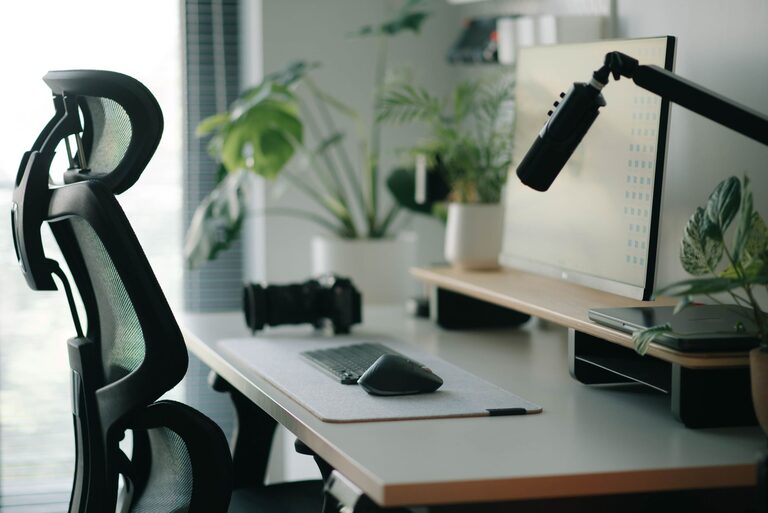
Comfort should be a priority when choosing furniture. A desk should provide enough room for your computer, notebook, lighting, and any other tools you use regularly. Avoid choosing a desk that is so large it overwhelms the room or becomes a place to collect clutter.
A supportive chair is also important. Look for a chair with a comfortable seat, adjustable height, and enough back support for your preferred working position. If you enjoy changing positions, consider adding a footrest or using a small table that allows you to work from different spots.
Keep the layout simple:
– Place the desk where you can move around it easily.
– Leave enough space to pull the chair back comfortably.
– Position frequently used items within easy reach.
– Avoid blocking windows, doors, or walkways.
– Use furniture that fits the scale of the room.
If you already own a desk and chair, try adjusting their height and position before buying anything new. A few small changes may improve the overall feel of the workspace.
Use Soft, Balanced Lighting
Lighting has a major effect on the atmosphere of a room. Natural light can make a workspace feel open and pleasant, so place your desk near a window when practical. Position your screen to reduce glare, and use curtains or blinds to soften bright sunlight.
Add layered lighting for cloudy days and evening work. A desk lamp can provide focused light, while a floor lamp or ceiling light can brighten the rest of the room. Choose bulbs with a comfortable, soft appearance rather than harsh, overly bright lighting.
You can also use lighting as a decorative feature. A small lamp with a fabric shade, warm-toned bulb, or simple design can make the desk area feel more welcoming. Keep cords neat by guiding them along the back of the desk or using a cable box.
Create a Calm Color Palette
Color can shape the mood of a workspace. Soft neutrals, muted greens, gentle blues, warm whites, and light earth tones often create a calm background. You do not need to repaint the entire room. Introduce color through smaller items such as:
– A desk mat
– Curtains or blinds
– Storage boxes
– Artwork
– A small rug
– Cushions or fabric accessories
Choose two or three main colors and repeat them throughout the area. A consistent palette can make the workspace feel tidy, even when it contains several practical items.
If you prefer brighter colors, use them as accents rather than covering every surface. A colorful notebook, vase, or piece of artwork can add energy without making the room feel distracting.
Keep the Desk Clear
A cluttered desk can make it harder to relax when you sit down. Keep only the items you use often on the desktop. Store extra supplies in drawers, baskets, or labeled boxes.
Try a simple daily reset:
- Return loose items to their storage locations.
- Recycle or file papers you no longer need.
- Put away cups, dishes, and empty packaging.
- Close or organize open notebooks.
- Wipe the desk surface.
- Prepare the items you will need the next day.
You can also divide storage into three categories: daily essentials, occasional supplies, and items that belong elsewhere. This makes it easier to decide what stays on the desk and what should be moved.
Open shelving can display attractive items, but closed storage may create a calmer appearance. Use a combination of both if you want your workspace to feel personal without appearing crowded.
Add Natural Elements
Natural materials and greenery can make a workspace feel warmer. A small plant, vase of branches, wooden tray, or woven basket can add texture and visual interest.
Choose plants that suit the available light and the amount of care you want to provide. If live plants are not practical, high-quality artificial greenery or nature-inspired artwork can create a similar decorative effect.
Avoid filling every open space. One or two natural elements may be enough to soften a desk area while keeping it practical.
Reduce Visual Distractions
A relaxing workspace should help you focus without feeling empty. Remove items that create unnecessary visual noise, such as piles of unopened mail, unused equipment, or too many decorations.
Keep screens and technology organized by:
– Bundling similar cables together
– Using a monitor stand with storage
– Placing chargers in one container
– Hiding power strips where possible
– Moving rarely used devices off the desk
If the workspace is in a shared room, use a basket or drawer to store work materials at the end of the day. This allows the room to return to its regular purpose and helps create a clearer separation between work time and personal time.
Include Personal, Comforting Details
Personal touches can make the space feel like your own. Add a framed print, favorite color, meaningful object, or small collection of books. Choose items that make you feel comfortable without becoming distracting.
Texture also contributes to a relaxed atmosphere. Consider a soft rug under the desk, a fabric lampshade, a comfortable throw, or a woven storage basket. These details can make a practical workspace feel more connected to the rest of your home.
You might also keep a small notebook for ideas, a simple timer, or a cup for pens. Choose useful accessories that support your routine rather than adding clutter.
Build a Simple Workday Routine
The workspace itself is only part of the experience. A consistent routine can make it easier to begin and finish each work session.
Before starting, open the blinds, turn on a lamp, and place the tools you need within reach. During breaks, step away from the desk, move to another room, or look out the window for a few minutes.
At the end of the day, close applications, clear the desktop, and return supplies to their storage areas. If your workspace is in a shared room, put away work equipment when possible. This small closing routine can make the space feel restful again.
Make Changes Gradually
You do not need to redesign your entire workspace at once. Begin with the changes that will have the greatest effect, such as improving the lighting, clearing the desk, or adjusting the chair.
After using the space for a few days, notice what feels uncomfortable or inconvenient. You may discover that a lamp needs to move, storage should be closer, or the desk would work better at another angle.
A relaxing home workspace is created through practical choices and regular adjustments. By combining comfort, organization, gentle lighting, and personal style, you can build a space that feels calm, useful, and easy to enjoy every day.
Related Post

Simple Ways to Make Everyday Chores More Manageable
Make household chores feel less overwhelming with simple routines, practical tools, and small habits that [...]
Desk Setup Tips for Better Focus and Comfort
Create a desk setup that supports concentration, reduces distractions, and helps you stay comfortable throughout [...]

How to Plan a Restful Day Off at Home
Create a relaxing day at home with simple planning, calming activities, nourishing meals, and plenty [...]